
Dog Training Tips for Puppies: Raising a Confident Dog in a Loud City World With Force-Free Guidance and Positive Reinforcement
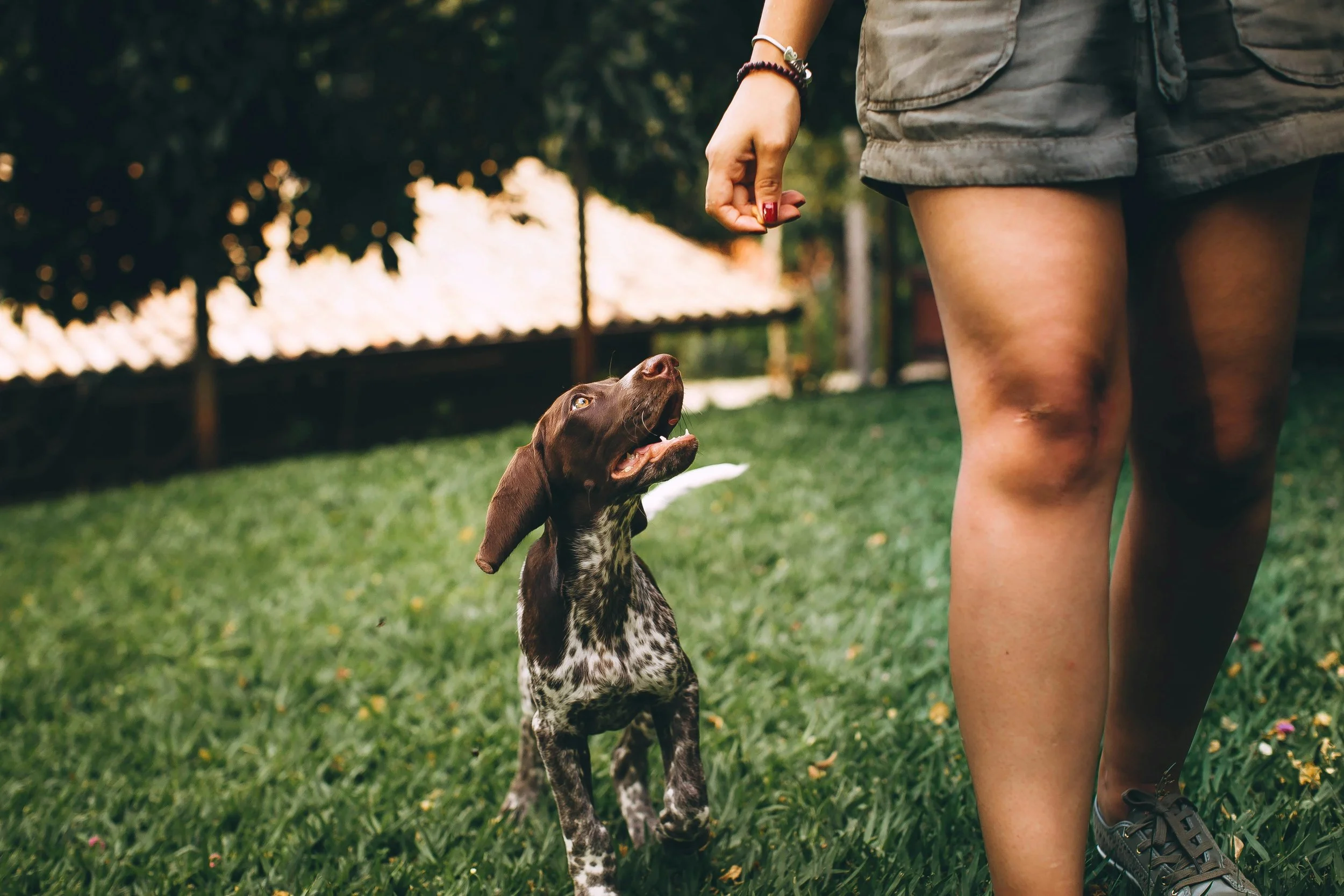
Successful puppy training isn't about barking orders; it’s about managing your puppy’s "internal bucket." By prioritizing Urban Neutrality over forced socialization, respecting the 3-3-3 Rule, and using high-value "Puppy Paychecks," you can help your dog navigate the NYC sensory storm with confidence and calm.
Key Takeaways
Great puppy training starts with managing your dog’s environment, not controlling their behavior.
Focus on thresholds, reward generously, and prioritize calm exposure over constant interaction.
Force-free training builds trust, which leads to real, lasting results—especially in a busy city.
The 3-3-3 Rule: Honoring Your Puppy’s Biological Clock
Whether you are bringing a new puppy into a West Village walk-up or returning from a training retreat, you must respect the 3-3-3 Rule. Think of it as a biological roadmap for decompression:
3 Days: Survival mode. Your puppy is overwhelmed. Focus on safe spaces and zero-pressure bonding.
3 Weeks: Settling in. Their true personality—and "naughty" habits—emerge. Start gentle routines.
3 Months: Trust is built. This is where advanced training truly sticks.
In a busy city like New York, the "3-3-3" clock often moves slower. The best time to start training is immediately (typically at 8 weeks), but your expectations must match your pup’s stage. Early, force-free training builds a foundation of trust before city-induced bad habits can form.
Why Positive Reinforcement is the Best Way to Train a Puppy in the Big City
Think of your puppy’s brain as having a "Learning Window." When you use fear, "alpha" corrections, or physical punishment, that window slams shut. The puppy enters a state of fight-or-flight where they cannot process information.
Positive reinforcement—rewarding desired behaviors—keeps that window wide open. In a city where a puppy is already overstimulated, force-free methods ensure they feel safe enough to actually listen.
3 Pillars of Urban Training: Neutrality, Thresholds, and “Puppy Paychecks”
Practice the Art of Ignoring
Socialization isn’t about saying hello to everyone—it’s about learning to exist calmly around distractions. When puppies meet every dog on the sidewalk, they often become “frustrated greeters.”
Expert Tip: Practice “Watch Me” or “Look at That” games on a quiet street. Reward your puppy for simply observing a person or dog and then choosing to look back at you.
Respect the Threshold
If your puppy suddenly won’t listen and ignores the treat in your hand, they’re likely over threshold.
Expert Tip: Stop the training immediately. Retreat 20 feet to a quieter area and let their nervous system reset.
Use High-Value Rewards
You wouldn’t work a high-stress corporate job for minimum wage, and your puppy won't work a crowded sidewalk for a piece of kibble.
Think of rewards like a paycheck system:
Kibble = $1
Cheese or chicken = $50
Freeze-dried liver = $100
Expert Tip: Save your $100 rewards for the hardest moments—busy sidewalks, elevators, loud noises.
Training Your Puppy for the "Urban Transition"
Puppies don’t generalize well. A “down” in your living room is not the same as a “down” next to a subway grate.
Start in low-distraction areas like your apartment or hallway. Then gradually build to busier environments.
Expert Tip: This is where graduated exposure comes in. Start force-free training in your hallway, then move to the sidewalk, and eventually the park.
Real-World Tips for Common Puppy Training Challenges
Even with a perfect plan, challenges like potty accidents, nipping, and demand barking will happen. Patience and consistent positive reinforcement are the keys to turning these hurdles into bonding moments.
Check out this AKC resource for how to tackle common puppy training challenges.
From Pavement to Pasture: The Power of a Decompression Stay
City dogs are constantly “on.” At Far Fetched Acres, we give them space to turn that off.
Our 127-acre countryside campus allows dogs to sniff, explore, and regulate naturally. When cortisol drops, learning becomes easier and faster.
“One of the biggest priorities for [us] is environment arrangement,” says Kate Walsh, lead trainer for Far Fetched Acres. “Setting a dog up to have the opportunity to make correct choices is just as valuable as reinforcing when they do make a correct choice.”
Our Puppy Camp combines this environment with expert, force-free guidance—giving puppies the foundation many city homes can’t replicate.
Give Your Puppy the Ultimate Head Start
Raising a puppy in a loud city is a marathon, not a sprint. By prioritizing their emotional wellbeing and using science-based, force-free guidance, you aren't just teaching commands—you're building a resilient partner for life.
If you need some guidance in guiding your puppy, the team at Far Fetched Acres is here to help.
Frequently Asked Questions About the Best Way to Train a Puppy
What is the 3-3-3 rule in puppy training?
It’s a guideline for adjustment: 3 days to decompress, 3 weeks to settle, and 3 months to fully feel at home. Every dog moves at their own pace.
What is force-free puppy training?
Force-free training rewards desired behaviors using treats, play, or praise. It avoids fear and builds trust, helping puppies feel confident enough to learn.
Is "Board and Train" worth it for a puppy?
When it’s force-free, it can be a powerful head start. A countryside retreat like Far Fetched Acres Board and Train Program gives your dog a head start on Urban Neutrality that is incredibly difficult to achieve in a 600-square-foot apartment.