
How to Train a Reactive Dog Without Shame, Force, or Quick Fixes
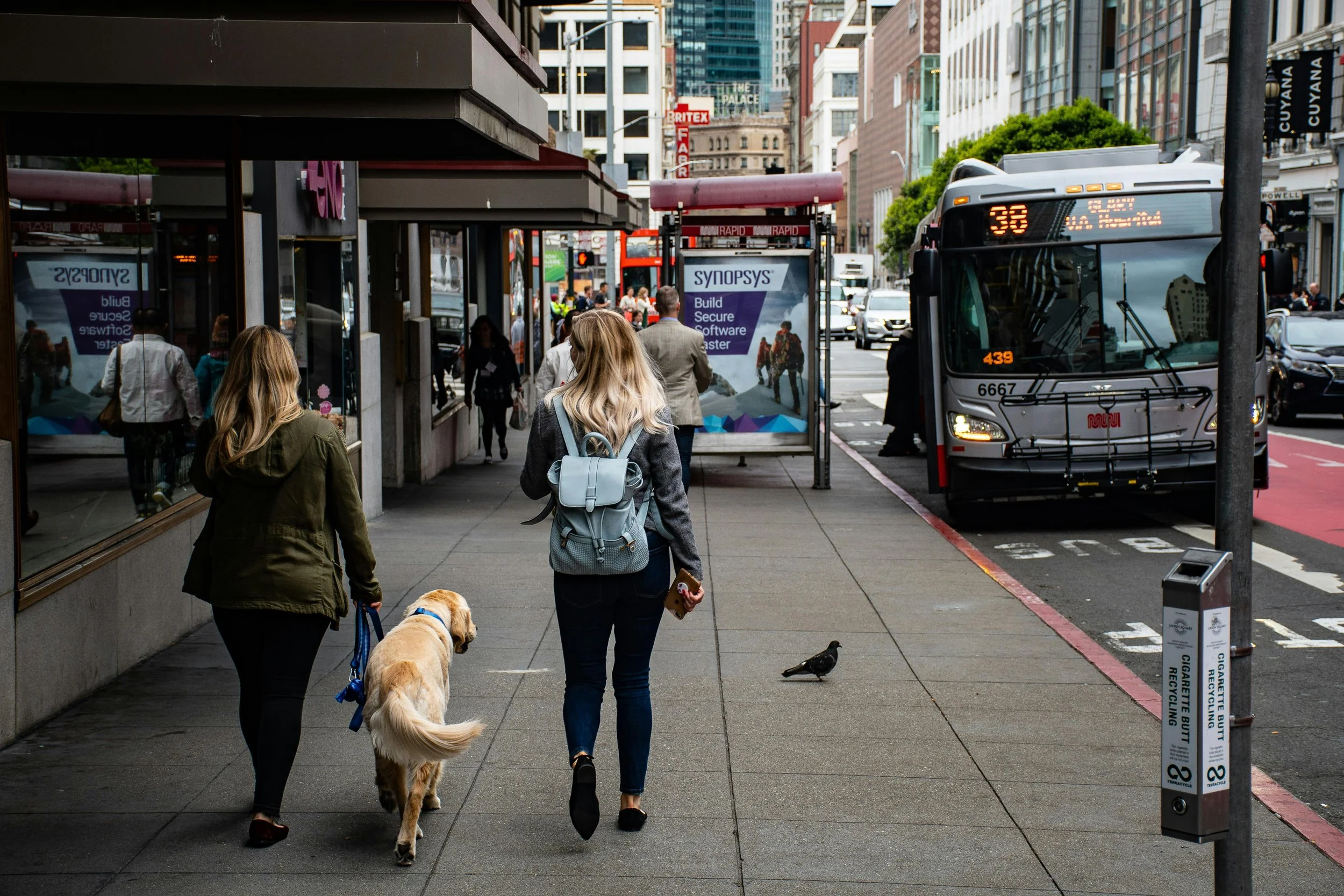
If your dog barks, lunges, or melts down on busy NYC sidewalks, you’re not alone.
Reactivity isn’t disobedience. It isn’t a stubborn streak. It’s a nervous system under stress. And with the right support, your dog can learn to move through the city with more confidence and far less chaos.
Why Dogs Become Reactive
Reactivity is rarely about dominance. It’s about emotion. Before you can address it, you need to understand the “why” behind the behavior.
Genetics: Some dogs are wired to be more sensitive to movement, sound, or novelty. Working breeds and high-alert dogs may react faster and more intensely.
Early Experiences: Limited social exposure, traumatic encounters, or chaotic environments during puppyhood can impact coping skills later in life.
Chronic Stress: City dogs, especially in places like Manhattan or Brooklyn, live in constant stimulation. Sirens, crowds, tight sidewalks, delivery carts—it adds up. A dog who never fully decompresses has less capacity to stay calm.
Frustration on Leash: Many leash-reactive dogs are social dogs who become frustrated when they can’t greet. The leash removes choice, and frustration explodes into barking, lunging, or jumping.
Jake’s Story: When Reactivity Isn’t About Obedience
Jake, a Belgian Malinois and German Shepherd mix, was adopted from a rescue at six months old. But his new owners quickly realized he struggled with city life.
At home, Jake was a joy. But outside of the house, things looked different.
Any time Jake encountered another dog on a walk, he went into overdrive. He pulled on the leash. He barked. He howled. Whenever he got close to another dog, he growled and raised his hackles.
Jake wasn’t aggressive. He simply lacked coping capacity.
Before adoption, Jake had lived in a single room with only his brother as company. No walks. No graded exposure to the world. No new environments.
He had never learned how to greet politely or disengage calmly. Now, every bark and lunge was his nervous system shouting, “This is too much.”
If that sounds familiar, you’re not failing. Your dog isn’t broken. They may simply be overwhelmed.
What Reactivity Really Is
Reactive behavior is nervous system overload. When triggers stack—a loud truck, a tight leash, a dog across the street—your dog moves past their individual threshold and the thinking brain goes offline.
The barking, lunging, spinning or freezing you see isn’t stubbornness. It’s a sign that your dog is stressed and going into fight-or-flight mode. The good news is, stress can be worked with—carefully, thoughtfully, and without force.
How to Train a Reactive Dog (Step-by-Step)
Training a reactive dog means building regulation first and exposure second.
1. Stop Flooding
Every explosive reaction strengthens the pathway. Every calm rep builds a new one.
That means:
No crowded dog parks.
No forced leash greetings.
No “they need to get used to it.”
Protect your dog from rehearsing the behavior you want to change.
2. Build Distance and Safety
Create space early by crossing the street when you see another dog approaching or using parked cars as visual barriers. Step into driveways to avoid close encounters. Advocate for your dog.
Safety lowers arousal. Lower arousal creates learning.
3. Teach Regulation Before Exposure
Before asking for obedience, build regulation through:
Pattern games
Rewarding check-ins
Calm observation at a distance
Structured loose leash walking
Lower arousal first, then layer skills.
4. Gradual, Controlled Socialization
Socialization isn't throwing your dog into chaos—and for a reactive dog, that distinction matters even more. The measure of good socialization isn't how many dogs your dog meets. It's whether they leave each experience a little more relaxed than when they arrived.
Set your dog up for success with controlled, intentional experiences that build confidence without pushing past their threshold, such as:
Structured distance work, where your dog can observe the world without being overwhelmed by it.
Parallel walks with calm, well-matched dogs.
Neutral environments where nothing is being demanded of them.
Small, curated playgroups—if and when your dog is ready for them.
Why City Dogs Struggle More
Urban life compresses dogs. Sidewalks funnel them into tight spaces. Elevators remove escape routes. On top of that, they’re overwhelmed by constant stimulation.
Without space to decompress, the nervous system stays activated. That’s why environments designed for decompression—like Far Fetched Acres’ Midweek Escapes—can be transformative for reactive dogs. Space, rhythm, and calm environments help restore balance.
When to Seek Professional Help
Support is not failure. If you see any of the following signs in your dog, it may be time to consult a professional who specializes in relationship-based training.
If reactivity is escalating.
If your dog redirects onto you.
If you feel anxious every time you clip the leash.
If you’re avoiding walks entirely.
An experienced dog trainer can assess threshold, design structured exposure, and coach you through the process with clarity and confidence.
Far Fetched Acres is designed for city dogs who need structured guidance, not suppression. Through our personalized training programs—including immersive Board & Train and private in-home training sessions—we build coping skills, not quick fixes.
Can a Reactive Dog Truly Improve?
Yes. With the right support, nervous systems can change and confidence will grow.
Jake now walks calmly with space, structure, and consistency. He still notices other dogs. He just doesn’t unravel.
His progress didn’t come from force. It came from safety, repetition, and careful exposure.
If you’re ready to build that kind of plan for your dog, connect with our team. We’ll help you create a path forward that feels steady and realistic.
Frequently Asked Questions About Reactive Dogs
Can you completely fix a reactive dog?
Reactivity is usually managed, not erased. Many dogs become beautifully neutral and far more resilient. The goal is not perfection. It’s safety, confidence, and improved coping.
Is reactivity the same as aggression?
No. Reactivity is an over-response to a trigger. Aggression involves intent to cause harm. Reactive dogs often want distance, not conflict.
How long does reactive dog training take?
It depends on your dog’s history, environment, and consistency of practice. Some dogs show improvement within weeks. Deeper resilience takes months of steady work.
Can older dogs still be socialized?
Yes. Socialization is lifelong. With older dogs, it simply happens more gradually and with greater attention to threshold and recovery time.