
What Happens After Board & Train? Bringing Your Dog’s Training Home: An Interview with Jeanette Kelso
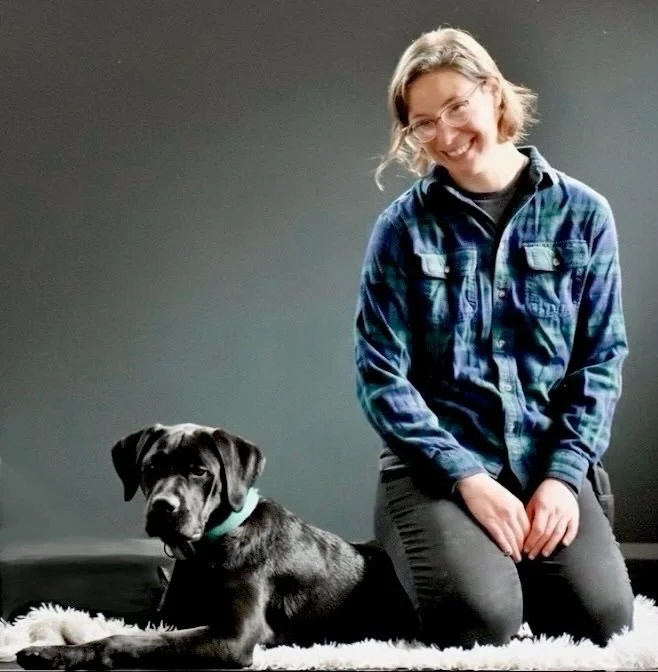
Can you tell me about your background as a trainer?
Jeanette: When I was a kid, my parents, siblings and I would train and show our dogs in competition Agility, Obedience and a few other dog sports, although Agility was our primary passion. It was purely for the fun of it, for enriching our dogs' lives and for the connection we were building with them. We were fortunate to find a training club that was one of the few groups beginning to incorporate positive reinforcement into their training techniques. At the time, that was not very common. In 2015, I moved to NYC and started working for New York Walk and Train (the NYC component of Far Fetched Acres) as a dog walker. I started becoming more interested in participating in the training and behavior part of the company, did my apprenticeship with Colleen and then transitioned into training full time for Far Fetched Acres around 2017.
How does positive reinforcement shape the way dogs learn and behave?
Jeanette: One of the biggest differences is that positive reinforcement creates a two-way learning dynamic between the dog and the human.
Because we’re not using force or aversive methods, dogs are able to make choices, make mistakes, and communicate with us. Those moments become feedback. We learn from them, and adjust how we guide the dog.
It becomes less about control and more about collaboration, which leads to stronger, more lasting behavior.
What behaviors do dogs often learn during Board & Train?
Jeanette: We teach everything from basic manners like sit, down, and stay, to crate comfort and house training for puppies.
We also work on leash walking, recall, impulse control—things like “leave it”, “drop it”—and teaching dogs to settle, often using a mat or bed.
For puppies, we focus a lot on socialization and building confidence. It’s about helping them understand the world they’re living in.
What happens when a dog comes home from a structured training environment?
Jeanette: The biggest thing is continuing the routine we’ve already built.
At camp, dogs are on a consistent schedule—whether that’s potty breaks, rest time, play, or short training sessions. When they come home, we want owners to stick as closely to that routine as possible.
It doesn’t have to be exact, but that predictability helps the dog understand their new environment and continue learning.
That’s really what dog training after boarding looks like—it’s not starting over, it’s continuing what’s already been built.
How does Far Fetched Acres support dog training after boarding?
Jeanette: For dogs who stay with us for at least a week, we include a complimentary in-home transfer session.
We go into the client’s home—either myself or another one of our city trainers—and spend about an hour going over everything. That includes how to maintain the routine and how to continue training in their daily life.
We also practice the specific skills the dog learned at camp, whether that’s leash walking, recall, or impulse control.
Why is the in-home transfer session so important?
Jeanette: The environment at Far Fetched Acres is very different from New York City.
Camp is quieter and more controlled, which is great for building the foundations. But applying those skills on a busy NYC sidewalk is a completely different level of distraction.
The transfer session helps bridge that gap. We work with the owners in their real environment so the dog can apply what they’ve learned in a way that makes sense in their everyday life.
And just as importantly, we’re teaching the dog parents. It’s a team effort.
What tools do owners receive after Board & Train?
Jeanette: After a dog has come in for board and train, we provide a comprehensive final report that includes the dog’s schedule, training tasks, and everything we worked on during their stay.
We also include videos of the training so owners can see exactly how each behavior was taught.
In many cases, we’ll also outline next steps—what to work toward as the dog continues to develop. It’s all designed to support long-term progress at home.
How can owners continue using positive reinforcement in everyday life?
Jeanette: One of the biggest things is to look beyond structured training sessions.
Of course, we work on specific skills, but there’s also a lot of value in noticing and rewarding everyday behavior. If your dog is calmly lying down or making a good choice on their own, that’s something to reinforce. Training doesn’t just happen in sessions—it happens throughout the day. Those organic moments are really powerful.
Can you share an example of a dog who benefited from continued training?
Jeanette: One dog, Wilson, comes to mind. He’s a standard poodle who first came to us as a puppy camper.
He’s come back multiple times for refreshers and has also had training support in the city. He’s a really smart, energetic dog who has big feelings about his environment—which is very normal in NYC.
What’s great is that his foundation is so strong. His family has continued the work, and you can see how much he’s grown. He’s still learning, but he’s becoming an amazing, well-adjusted dog.
Why is Far Fetched Acres especially helpful for NYC dogs?
Jeanette: One of the biggest advantages is that dogs get access to a completely different environment.
At Far Fetched Acres, they can run freely, decompress, and really exhale. For city dogs, that kind of space can feel like a reset.
We then combine that with dog training at home, through in-home sessions and continued support, so they can bring those skills back into their everyday lives.
